Architect 360° The Cost of Staying Tax Engine Cost of Living Simulator Insights
Language
Get My Exit Plan
Germany flag

Germany

Europe's economic engine, now an EU passport in five years, with dual citizenship finally allowed.

Practical country intelligence for Americans weighing Germany as a route to EU citizenship, a career base, or a long-term move. Germany's 2024 reform cut the path to citizenship and, for the first time, allows dual nationality. Each deep dive focuses on the details that actually drive a smart decision.

Book Engagement
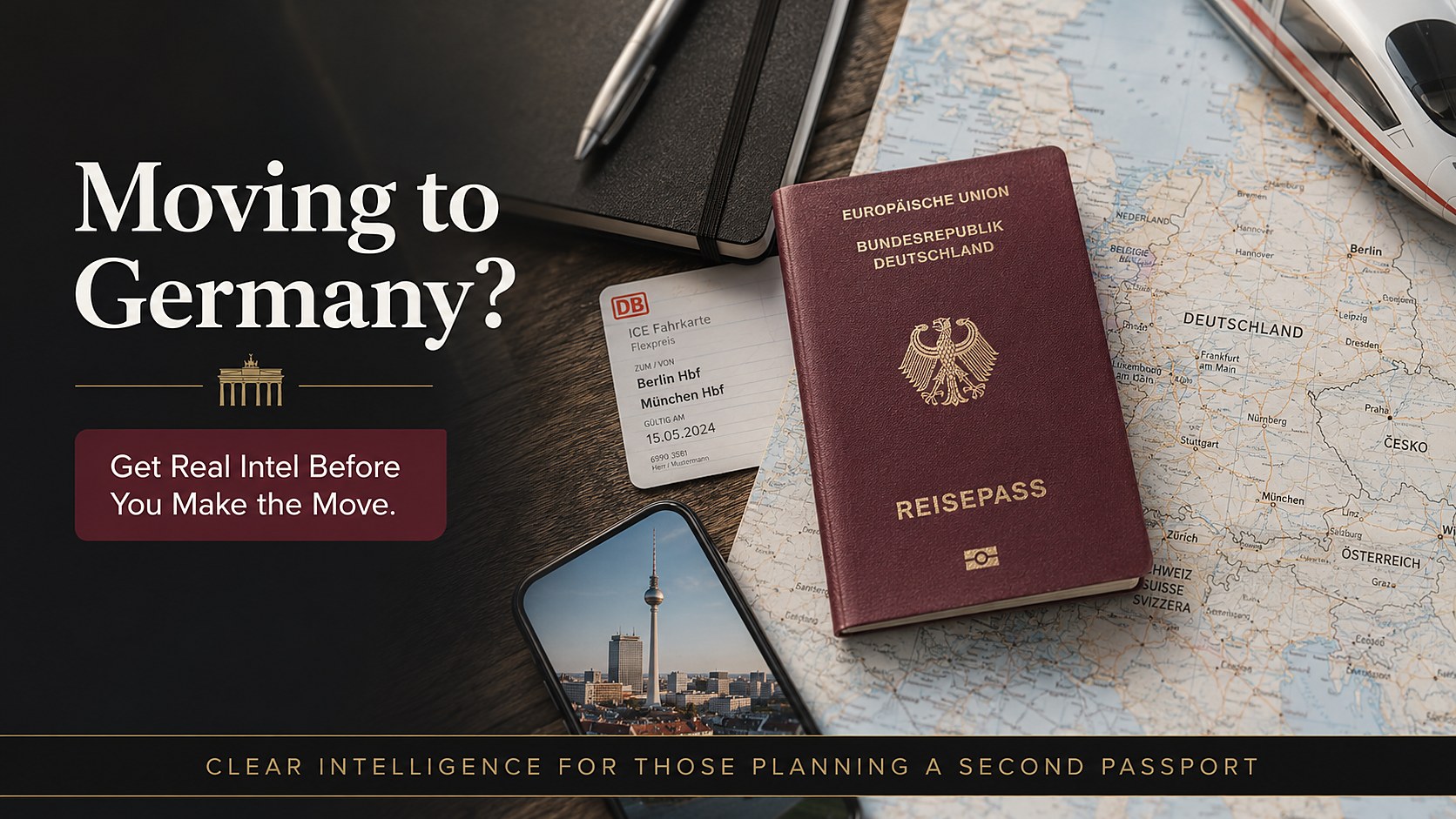
Moving to Germany, your path to a second passport
Germany At a Glance

The Snapshot
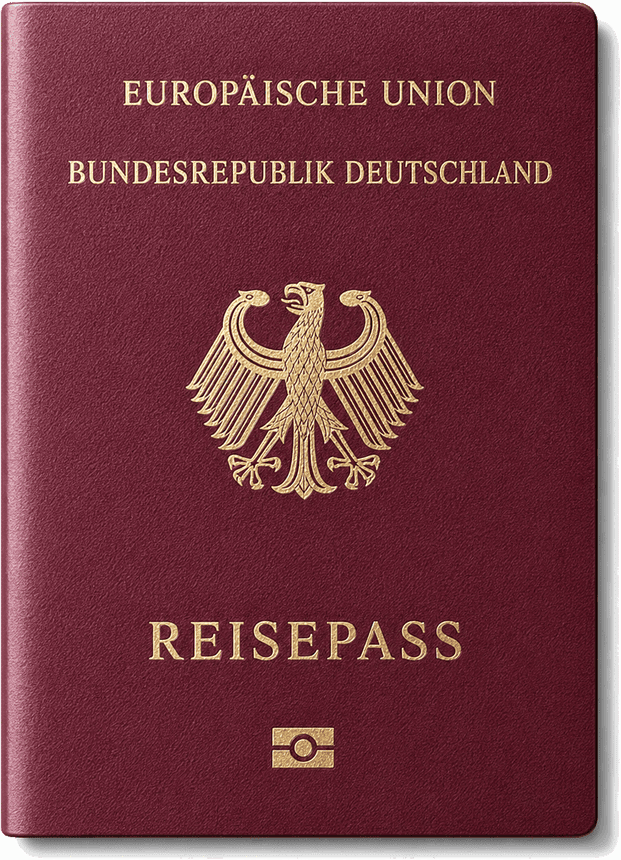
Germany passport
EU MemberYes
SchengenYes
CurrencyEuro (EUR)
Population~84 million
CapitalBerlin
Major CitiesBerlin, Munich, Frankfurt, Hamburg, Cologne
Passport Strength~190 (top tier)
Residency RoutesEU Blue Card, Skilled Worker, Opportunity Card, freelance
Citizenship Timeline5 years (since 2024 reform)
Dual CitizenshipAllowed (since 2024)
US Income Tax TreatyYes
Tax Residency TriggerDomicile / 183 days
Top Personal Income Tax45% + solidarity surcharge
Church Tax~8 to 9% (if registered)
VAT19%
English SpeakersWidely spoken in cities
Majority ReligionChristian
Healthcare SystemMandatory insurance (excellent)
Property OwnershipAllowed for foreigners
Cost of LivingModerate
SafetyHigh

Passport Overview

Germany Citizenship Grants

A path through Germany can offer:

The 2024 reform was a genuine shift, five-year citizenship and dual nationality, plan around the current (post-2025) rules.

Your Move

Want Citizenship or Residency in Germany?

We build the legal pathway, the tax plan, and the move itself. One engagement, handled end to end. Start with a strategy evaluation and get a clear verdict on your Germany options.

See The Germany Pathway Run My Numbers in Architect 360°

Architect 360° puts living in Germany at about 25% cheaper than a major US city. See what that saves your family

The Full Picture

Inside Germany

Residency Routes (No Golden Visa)

  • EU Blue Card for qualified professionals
  • Skilled Immigration Act routes and the points-based Opportunity Card (Chancenkarte)
  • Freelance / self-employment visa
  • Study and post-study work routes

Citizenship (2024 Reform)

  • Naturalization reduced from 8 years to 5 years of legal residence
  • Dual citizenship now allowed, no need to renounce your U.S. nationality
  • B1 German, financial independence, and civics required

Verify with counsel: the reform took effect June 2024, and the 3-year fast-track was repealed in October 2025, five years is now the universal minimum. Confirm current terms.

Key rule: citizenship ≠ tax residency. German tax follows residence, not the passport.

Income Taxes

  • Progressive rates up to 45%, plus a solidarity surcharge on higher earners
  • A church tax (~8 to 9% of income tax) applies if you register with a recognized church
  • Tax residency turns on domicile or 183 days

U.S. Persons

  • A U.S.-Germany income tax treaty is in force
  • U.S. citizens still file and are taxed on worldwide income
  • Coordination reduces double tax

Germany is not low-tax, the church tax in particular surprises new arrivals, confirm with counsel.

Moderate, and cheaper than many assume:

  • Munich and Frankfurt: the priciest
  • Berlin, Hamburg, Cologne: more reasonable
  • Strong value for a top-tier economy

Good value relative to peer economies. Confirm current figures.

  • Hearty regional cooking and excellent bread and beer culture
  • A fast-growing international dining scene in the cities
  • High food-safety standards

Solid and improving, especially in the major cities.

  • Excellent care via mandatory insurance (statutory or private)
  • Strong outcomes and access
  • High standards nationwide

Among the best systems in Europe, insurance is compulsory.

Schools

  • Free public schooling
  • International schools in major cities

Universities

  • Largely tuition-free, even for international students
  • Globally respected institutions

Free university education is a standout advantage for families.

  • A renter's culture with strong tenant protections
  • Tight markets in Munich and Berlin
  • Sizable deposits are standard

Most Germans rent long term, even comfortably-off ones.

  • Foreigners may buy freely
  • High transaction taxes (Grunderwerbsteuer) apply
  • Stable, conservative market

Factor in the substantial purchase taxes.

  • Exchange depends on your U.S. state's reciprocity
  • Some states exchange without a test, others require one
  • Process runs through the local authority

Check your state's reciprocity category early.

  • German is the official language
  • English is widely spoken in cities, business, and among the young
  • German (B1) is required for citizenship

You can start in English in the cities, but German is needed to settle and naturalize.

  • Christian heritage (Catholic and Protestant)
  • Orderly, punctual, and rule-respecting
  • Strong civil society and infrastructure
  • Safe and well-organized

Germany rewards reliability, planning, and respect for the rules, including the church-tax opt-in.

Best for
  • Skilled professionals and entrepreneurs
  • Those wanting EU citizenship plus dual nationality
  • Families valuing free education
  • Long-term planners building EU roots
Not ideal for
  • Zero-tax seekers
  • Those wanting a buy-a-visa route
  • Anyone unwilling to learn German
  • Those seeking a warm climate
  • A top-tier EU passport in five years
  • Dual citizenship now allowed
  • Europe's largest economy and job market
  • World-class healthcare and free universities
  • Stability and strong infrastructure

Realistic caveats: high taxes (and the church-tax opt-in), real bureaucracy, and a German-language requirement. The 2024 reform makes Germany far more attractive for permanent settlement.

Share this
Email X LinkedIn WhatsApp
Germany
By Application Only

Request Private Access

Tell us where you are and where you want to be. If there's a fit, your private blueprint follows within days. Everything you share is confidential.